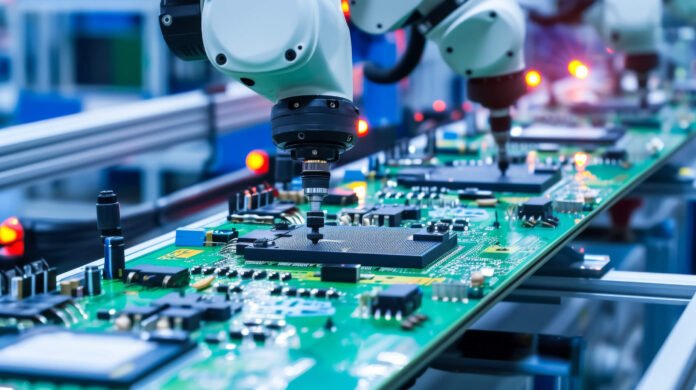
The silent killer of present-day electronics is heat. The smaller the device is and the more powerful it is, the more components are placed on a circuit board hence resulting in the increased temperature of operation. Without proper heat control, it may pose a threat of system breakdown, distortion of material and a considerably reduced product life span. The conventional FR-4 printed circuit board (PCB) has the history of being the staple of the electronics world over decades. It is affordable, durable and good enough to be used in most general purposes. Nevertheless, due to increasing demands in the high-power needs such as LED lighting and automotive power converter, the shortcomings of standard boards are evident. This leads to Metal Core PCB or MCPCB. As compared to the fiberglass counterpart, the metal core board is designed to be able to deal with thermal stress. These two forms of boards might appear the same on the surface yet, the structural differences between the two types determine which board is used in high-performance tasks. This is the reason metal core tends to emerge as the winner.
Thermal Management Superior
The main feature of a metal core PCB compared to a traditional FR-4 board is heat transfer capabilities. Fiberglass and epoxy boards are used in the conventional boards. Although these materials are a good electrical conductor, they are thermal conductors. This implies that the heat generated by a component in the board can find no outlet. It remains contained around the component forming hot spots capable of breaking the circuitry.
The solution to this challenge is provided by metal core PCBs that use a base metal structure, typically aluminum or copper, as an extension of the heat spreader. A thermally conductive dielectric material lies in the middle of the circuit layer and the metal base. The layer serves as a thermal conduit, swiftly conducting heat off of vital components and dumping it into the metal backing which serves as a huge heatsink.
Due to this effective conduction, MCPCBs have the capability of providing thermal conductivity rates that are 5 to 10 times more than the conventional FR-4 boards.
Dimensional Stability
There are a number of stresses that are imposed on the circuit boards and one of the most destructive is the variation in temperature. As substances become hot, they expand when they become cool, they shrink.
Traditional FR-4 boards are to some degree susceptible to deformation due to thermal pressure. When the board size is too large, then it may put stress on the solder joints or even break the connections resulting in intermittent failure.
Board Metal core boards have better dimensional stability. Fiberglass is far more rigid than aluminum and copper. Even in cases where the temperature reaches up to 140degC or 150degC the size of a metal core PCB will change far less than typical board. Stability is important in creating reliability of devices which may be used in severe conditions like under the hood of the car or in industrial lighting outdoors.
Durability and Lifespan
The very nature of the MCPCB construction is such that it is sturdier as compared to a typical board. This mechanical strength is ensured on the metal back-up so that the board does not crack or break when installing it or in the process of day-to-day use.
Besides, the life of the components on the board is directly correlated to temperature. The lifetime of an LED or semiconductor may reduce drastically with a 10 deg C increase in temperature. Metal core PCBs ensure that the life of the whole machine is prolonged by maintaining low temperatures of operations by efficient heat cooling. This saves the operator on warranty claims and maintenance expenses in the long run to the manufacturer.
Conclusion
Although metal core PCBs have obvious benefits related to thermal management and durability, they are not required by all the projects. A normal FR-4 board would be the most economical and suitable choice in case of building low-power consumer electronics such as a remote control or a digital clock.
But when you are working with high-power LEDs, power converters, regulators, or any application where heat generation is an issue, it is a risk to use conventional materials. This is because the metal core PCB is the obvious choice in high-performance electronics due to its level of heat dissipation, mechanical strength and stability. When you spend the right material base, you make sure that your product would be more efficient and more durable.
Optima Technology is a top provider of metal core PCBs or MCPCBs.