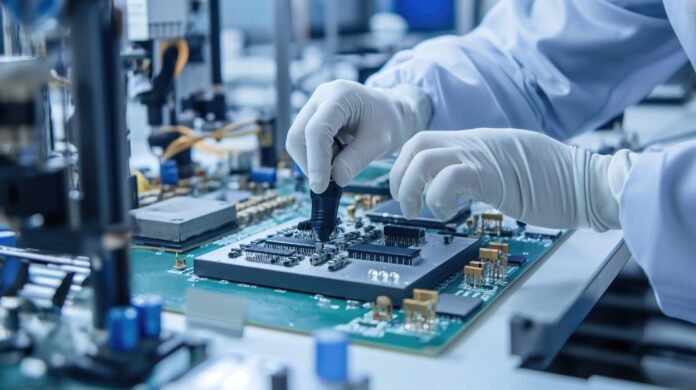
Production of electronics is a balancing process. High performance and reliability are also desired, yet the Bill of Materials (BOM) must be kept within control to ensure good profit margin. There is also a tendency of some costs coming in unnoticed in the assembly stage and it leaves a product otherwise profitable as a liability. The good news is that you do not need to recreate the wheel and compromise the quality to save money. With some strategic decisions at the beginning of the design stage, you can reduce your Printed Circuit Board Assembly or PCBA cost by a large margin. This is how you can streamline your board to have an efficient and cost-effective run of production.
Effective Socio-technical tips in reducing PCBA
The saving in assembly cost is typically a matter of time and complexity. The more time a board will need to assemble, and the more complicated the machine will be, the more expensive it will be. The six strategies are aimed at streamlining the process.
1. Single-Sided Assembly Only
Where possible, make your board such that the components are on one side. The process of the double-sided assembly demands a repetition of the pick and place machine and reflow oven, twice each. This doubles the set up time and allows higher chances of defects.
In the event that you need to use both sides, put all of the large and heavy or even complicated parts on the primary side and reserve the secondary side to the small passive parts such as resistors, and capacitors.
2. Minimize Component Variety
Each distinctive part in your board must have a specific slot in the pick-and-place machine. When the design you are creating makes twenty-different kinds of resistors necessary, whereas it is possible to replace those resistors with five different kinds and still meet your requirements, you are increasing costs.
Consolidate your parts list. Provided it is possible to use a 10kO resistor instead of a 10.2kO resistor without compromise of performance, undertake the change. Reduced unique parts implies reduced reel changes and rapid machine set up.
3. Standard Component Sizes
Miniaturization is an in vogue but it does not come without its cost. Very miniature components (e.g. 01005 packages) demand precise assembly machines which are more expensive to use. They are also less inspections and re works.
Except in devices with extreme space limitations (such as a smartwatch or a hearing aid), conventional component sizes such as 0603 or 0402 are safe. They are less expensive to purchase, they are less difficult to manipulate, and yield higher rates during assembly.
4. Optimize for Panelization
PCBs are produced on substrates that are large in size. The larger the number of boards that can be installed on a single panel, the less cost per unit.
Shapes and cutouts that are not of an irregular shape and have complex shapes lead to wastage of FR4 material. In the event that your enclosure can accommodate it, use common rectangular shapes. Assuming that you have a non-standard shape that is needed, collaborate with your manufacturer to organize the boards on the panel (a process known as nesting) to make the most out of the material.
5. Watch Out On Through-Hole Technology
Modern automated assembly uses the Surface Mount Technology (SMT). Although through-hole components are robust and dependable as connector, they usually have to be manually inserted or wave soldered, which are different processes than the SMT process.
When you are able to substitute a part in a through-hole component with a similar SMT one, then do so. The fact that manual labor will be eliminated or will not require a second step of soldering will save a lot of money spent on labor.
6. Design for Manufacturing (DFM) should be given priority
The highest expenditure in PCB assembly is correction of errors. What appears to be a great design in software may not be something that is reliable to be constructed in the real world.
Check before sending your files to the assembly house a Design for Manufacturing (DFM). This process can detect such problems as components that are too close to each other, not having enough solder mask dams, or even orientation. Early detection of these problems will save future scrap and re-spins which are expensive.
Conclusion
Cutting PCBA may not only be a matter of negotiating at lower prices; it is also a matter of clever engineering. Through simplicity of design, lessening variety of components, and optimization of standard process of manufacturing, you will have cut assembly times and limit waste. Consider these tips when reviewing the designs you already have in place and you may find out that efficiency and saving is only a few design adjustments off.
Optima Technology is a reputable PCBA provider you can look to.