When you look at any coffee table in the 1990s, there is a pile of fat, shiny catalogs that would probably be on it. They were the blood of the retail they were bulky, and costly to publish, and in many cases, when they reached the mail-box, they were out of date. The physical catalog was dominant, decades upon decades. It was a touch-feel method of searching, manifesting, and ultimately, purchasing.
However, with the explosion in e-commerce, it was anticipated that the catalog would die. What was the use of turning paper pages when you can simply search what you wanted in the internet? But the catalog did not die, it was developed.
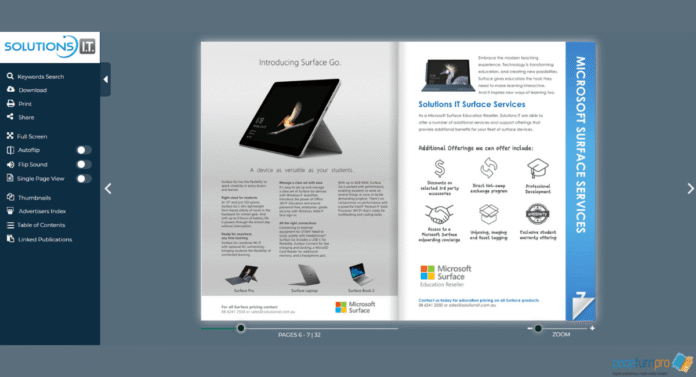
Digital catalog publishing has not only become a replication of its paper counterpart, but also an effective and interactive selling object by itself.
It is an intermediary of the inspirational shopping of print and the immediate gratification of online shopping.
The fact that you are only using the most basic system of dead PDFs or print mailers deprives your business of an enormous opportunity. Digital publishing of catalogs is not a fad; it is a very important part of a new omnichannel mix. This is the reason why now more than ever the switch is important.
The importance of digital catalog publishing
The digital transformation is not just about saving trees, although that is a pleasant surprise. It reflects one of the greatest transformations in the way customers access information and the manner they make a purchase.
1. Real-time correctness and instant updates
Print catalogs are permanent and that is one of the biggest headaches with print catalogs. When the ink has dried you are committed. When a price is altered, a product is rendered unavailable, or a mistake has been found, then the only way you can easily correct it is by printing a sheet of errata or by simply waiting until the next issue.
This is removed by the use of digital catalogs. Describing the products, pricing and changing the pictures can be updated in real-time. This will make certain that your customers are provided with the correct information at all times. A customer does not have to face the disappointments of clicking on a product and being informed that it has since been phased out three months ago. The trust in this reliability and lessening of friction in the sales cycle.
2. Increased interactivity & engagement
A physical page is a passive experience or a pro forma-A statical PDF. You read, you flip a page, you look. However, a digital catalog turns the process of browsing into an interactive experience.
The contemporary publishing systems enable one to incorporate rich media into the catalog. As opposed to a one-shot picture of a tent, a customer will be able to see a video of a tent being pitched in less than two minutes. They would not have to read that a dress is made of certain fabric, they could zoom up and witness the texture displayed in high definition.
You can also include:
- Buyers can directly shop: Buyers can have immediate access to add a product to their cart by clicking on a product.
- Pop-up information: Have a simple design but provide in-depth information on specifications on-demand.
- Gif animation: Get noticed with movement which print can not duplicate.
Such interactivity retains the user on the page. It transforms the catalog into more of an experience instead of a mere list of the products.
3. Huge cost-saving and rate of distribution
It is incredibly costly to print and ship hard copies of catalogs. The cost of paper changes, postage fees increase, and it is a complicated issue of how to ship thousands of booklets. Moreover, print lead-time is big; you need to be months ahead of it.
These costs and schedules are cut by digital publishing. No printing plates to be set, no paper to be purchased, no postage to be paid. You are able to publish a catalog and share it with the whole world in a couple of seconds through email, social media, or your site.
This pace offers more frequent & focused publications. You will not have to have one large yearly catalog, but smaller, seasonal lookbooks or niche collections with certain customers in mind. You are able to respond to the trends instantly instead of waiting until the next print-run of a given season.
4. Quantifiable information and metrics
ROI is a farfetched game with a physical catalog. You could use source codes or certain phone numbers but you never actually know which pages were read, which products attracted the attention of the customer and where they lost.
Electronic catalogs offer a gold rush in data. You can track:
- Page views and duration: What are people taking long?
- Click-through rates: What products are having the greatest interest?
- Bounces: What are people abandoning?
- Use of the devices: Do your customers use mobile, tablet or desktop?
This knowledge enables you to keep on improving your approach. When you realize that everybody avoids the introduction and goes straight to the sale section you can modify your layout in the next issue. You cease to scream into nothingness; you are engaging into a discussion supported by facts.
5. Connecting with your e-commerce platforms
The goal of a catalog is sales. Historically, this has been a disconnected experience: browse the product in the catalog, lay the catalog aside, sit down to the computer, enter the URL, search to see whether it is there.
This purchase route is made easier by the use of digital catalogs. The integration with your e-commerce platform would imply that the inventory can be automatically synchronized. A customer gets to view a pair of shoes that he/she likes, and they must just click on the Buy Now button, and the item will be added to their cart, and they are redirected to the checkout.
This integration minimizes cart abandonment. The less action a customer must go through between I want that, and I bought that the better are your conversion rates.
Conclusion
The printed magazine has a niche and its niche is good but in terms of efficiency, reach and conversion, digital is the evident choice. It also fulfills the need of modern consumer to be fast and convenient besides giving the businesses the agility they require to compete.
When you are going for digital catalog publishing, you are not simply converting a piece of paper, you are modernizing the whole sales system. You are shifting a monologue that is costly and stagnant to an interactive and data-driven conversation with your clients.
PageTurnPro digital catalog software is a good software option to try for free for 15 days.